
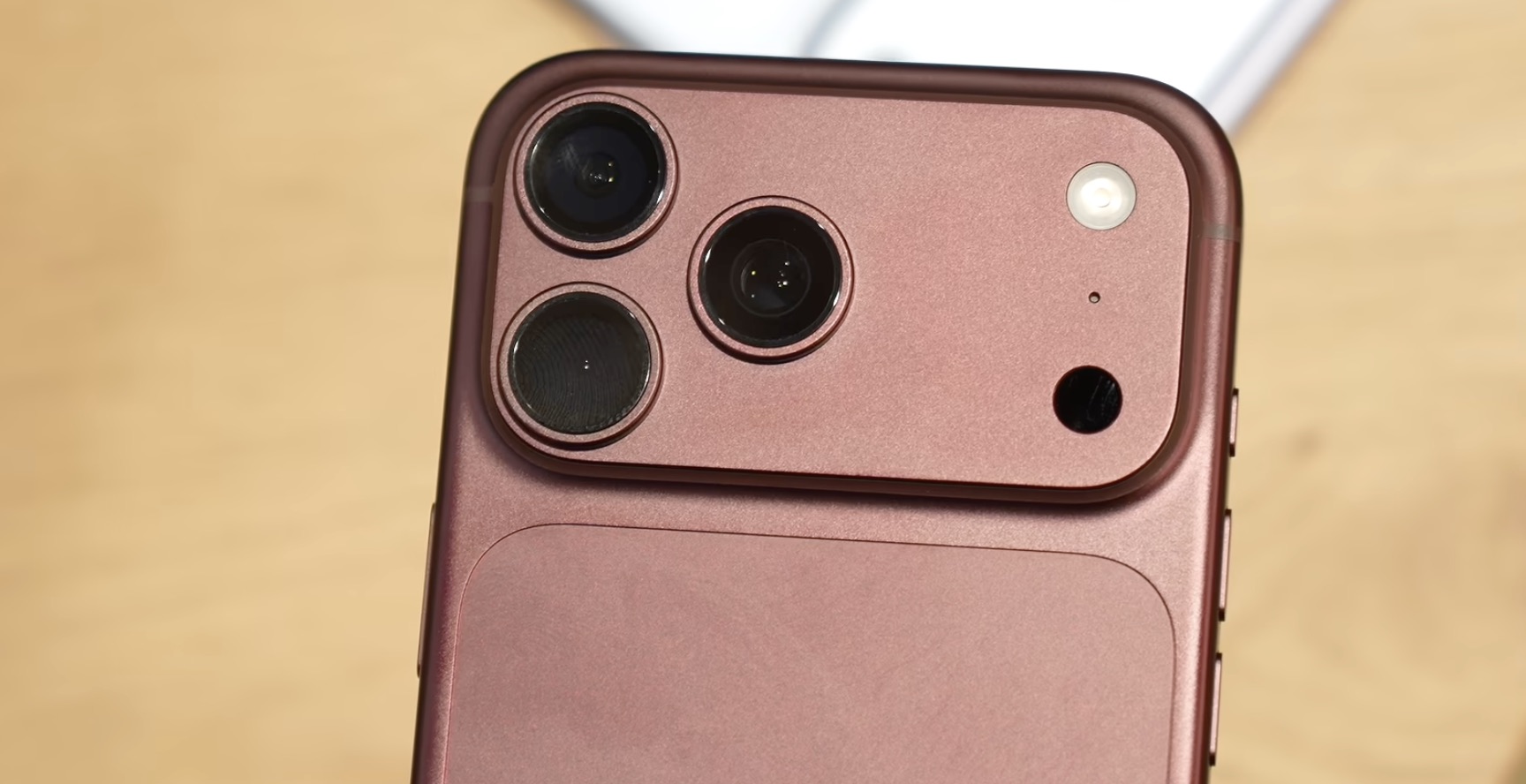
iPhone 18 Pro and iPhone 18 Pro Max are here. This is less of a visual reset than a hardware-focused update: a physical variable aperture joins the 48MP main camera, while A20 Pro and a larger vapor chamber target sustained performance rather than just a short benchmark run.
The specification sheets are easy to misread because some numbers change by region. Battery life is the clearest example: eSIM-only models are rated for up to 36 and 45 hours of video playback, while models with a physical SIM tray have lower published figures. This guide keeps the U.S. figures separate and calls out where a local model may differ.
Release date, U.S. price, and storage options
Pre-orders open September 12, with retail availability beginning September 18. In the United States, iPhone 18 Pro starts at $1,199 and iPhone 18 Pro Max at $1,299. Both are $100 higher than their iPhone 17 Pro counterparts at launch.
There is no 128GB Pro model this year. Both phones start at 256GB and are available in 512GB, 1TB, and 2TB configurations. The 2TB option, previously limited to Pro Max, is now available on the smaller Pro as well.
| Area | iPhone 18 Pro | iPhone 18 Pro Max |
|---|---|---|
| U.S. starting price | $1,199 | $1,299 |
| Storage | 256GB, 512GB, 1TB, 2TB | 256GB, 512GB, 1TB, 2TB |
| Display | 6.3-inch class | 6.9-inch class |
| Thickness and weight | 8.75mm, 211g | 8.75mm, 249g |
| Video playback, eSIM-only model | Up to 36 hours | Up to 45 hours |
| RAM | Not published by Apple | Not published by Apple |
Same screen sizes, noticeably more weight
The display sizes and outer dimensions stay in the same 6.3-inch and 6.9-inch classes, and thickness remains 8.75mm. Weight goes up, however: the Pro rises from 206g to 211g, while Pro Max rises from 233g to 249g. Five grams on the smaller phone may disappear once a case is fitted. Sixteen grams on Pro Max is more likely to be felt during long one-handed use.
The colors are Black, Silver, Glacier, and Burgundy. Apple’s official names are simply Black and Glacier, not “Deep Black” or “Glacier Blue.”
A smaller Dynamic Island can show more activity at once
The Dynamic Island takes up less space, but Apple says it can now show up to three Live Activities at the same time. Music playback, navigation, and a score update can share the area rather than forcing a single activity to own it. It is a small interface change, but it should be more useful than shrinking the black area for its own sake.

A20 Pro and a vapor chamber built for sustained work
A20 Pro is made on a 2nm process and combines a six-core CPU, seven-core GPU, and dual 16-core Neural Engine. Apple says its GPU is up to 40 percent faster than A19 Pro, with 50 percent more memory bandwidth. Neural Accelerators in the CPU and GPU support on-device AI work.
The thermal design changed too. Apple says it reworked the chip and memory layout so A20 Pro directly contacts the vapor chamber, whose surface area is three times larger than the iPhone 17 Pro version. The company’s “up to 40 percent” sustained-performance figure describes the whole system under its test conditions. It should not be read as a claim that the vapor chamber alone adds 40 percent to peak performance.
Claims that the phone has 12GB of RAM are not part of Apple’s public technical specifications. They may eventually be verified through teardown or developer evidence, but they are not an official purchase specification at publication time.
The variable aperture has four physical settings
The 48MP Fusion main camera can use ƒ/1.48, ƒ/1.8, ƒ/2.8, or ƒ/4.0. It changes automatically, and Pro Controls lets the photographer choose a setting directly. Six physical blades move inside the camera, so this is different from applying a software blur after capture.
At ƒ/1.48, the main camera can take in more light. ƒ/1.8 offers a middle ground for portraits, while ƒ/4.0 can extend depth of field for group shots or landscapes. A narrower aperture is not automatically sharper in every condition: it also reduces available light, which affects shutter speed and sensitivity.
Pro Controls also include aperture, shutter speed, white balance, and a histogram. Apple adds texture and grain controls to Photographic Styles and allows Cinematic depth effects to be applied to video after capture.
Apple Reference Image is not an authenticity badge on every photo
Reference mode stores sensor-signed data and uses Private Cloud Compute to create an immutable reference image. In Photos, the reference can be compared with an edited version much like a digital negative. This is not a universal label automatically attached to every picture. It is more meaningful for reporting, documentation, and other work where the provenance of an image matters.
Why some pages say 36 and 45 hours
For eSIM-only models sold in markets including the U.S., Canada, and Japan, Apple lists up to 36 hours of video playback for iPhone 18 Pro and up to 45 hours for Pro Max. Models with a physical SIM tray have a different battery allocation and lower local ratings. Check the specification page for the exact country of purchase rather than importing a battery number from a review in another market.
Apple’s fast-wired-charge claim of up to 50 percent in about 15 minutes requires a 60W or higher USB-C adapter that supports AVS, plus a USB-C cable. MagSafe can reach up to 50 percent in about 30 minutes with a 35W or higher adapter. Neither statement means every USB-C charger will produce the same result.
Apple also says Pro Max can provide around seven hours of video playback from a five-minute wired charge under its stated test conditions. That is a specific test result, not a promise for an arbitrary cable and adapter already on a desk.
SIM support and modem details vary by country
eSIM-only configurations are sold in the U.S., Canada, Japan, and some other markets. Before importing a phone, check whether it has a physical SIM tray and whether its eSIM setup works with the intended carrier. Apple publishes C2 modem support in selected regional specifications, but does not provide a public component supplier breakdown for every Pro Max model. Unverified supplier claims are not a useful buying criterion.
Who should consider upgrading?
The update is most persuasive for photographers who will actually use variable aperture and Pro Controls, or for people whose games and video workloads are limited by sustained performance. Pro Max buyers also get the longest battery estimate in eSIM-only regions, but have to accept a 249g phone.
If most photos are taken in Auto and the current battery life is already sufficient, a smaller Dynamic Island alone is not a reason to upgrade. This generation is aimed more at people who use the camera deliberately and run demanding work for longer periods than at everyone looking for an immediate new design.